James Webb Space Telescope Detects Carbon Molecules in Early Universe
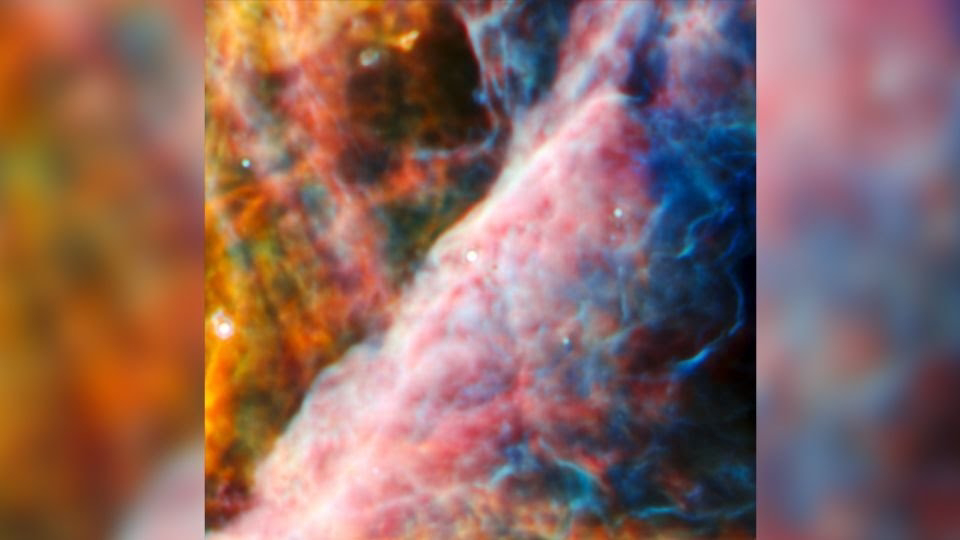
The James Webb Space Telescope Reveals the Orion Bar in Stunning Detail A team of astronomers using the James Webb Space Telescope (JWST) has detected carbon molecules in a galaxy that is 13.4 billion light-years away. This means that the molecules were present just 300 million years after the Big Bang. The molecules, called polycyclic aromatic hydrocarbons (PAHs), are a type of organic molecule that is thought to be a precursor to life. They are made up of carbon atoms that are bonded together in rings. The discovery of PAHs in the early universe is a significant finding. It provides new evidence that the building blocks of life may have been present very early on in the history of the universe. This could mean that life could have arisen more easily than previously thought. The PAHs were detected by the JWST's Mid-Infrared Instrument (MIRI). MIRI is designed to detect infrared light, which is invisible to the human eye. Infrared light can penetrate dust and gas, which...